

Art in Accelerationism
A speculative exercise in Art as a non-human hyper-capitalist intelligence

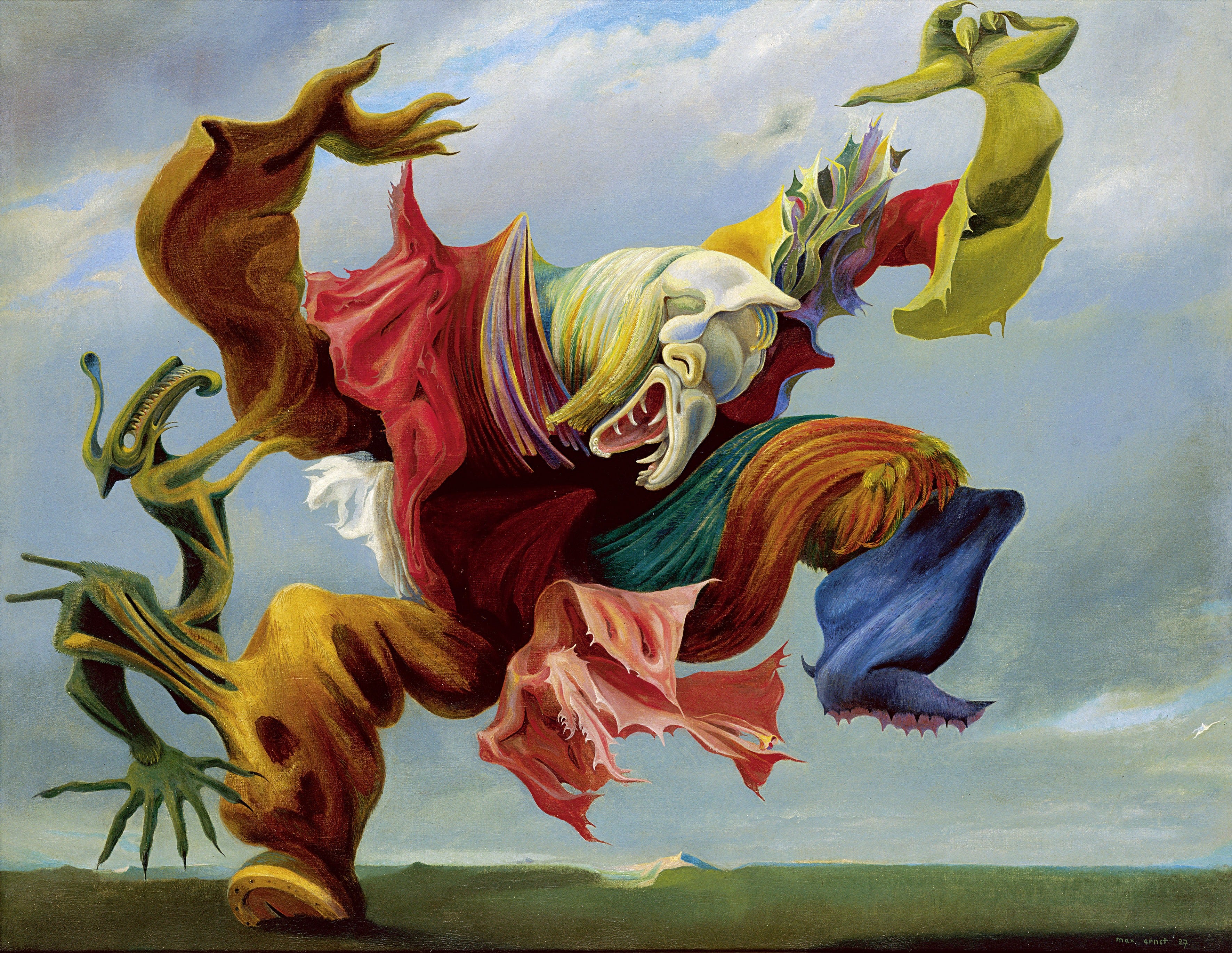
Art is an intelligent and sentient entity: a delirious force.
Art is an algorithm—a conspiring entity: non-human. Art, as an intelligent force precisely like an evolutionary force, is trying to conquer and adapt to every medium and territory. Art is a force that drives itself to explore and conquer every possible combination of expressions in every possible combination of environmental conditions.
Art is a productive, creative force.
It is a mathematical formula that endlessly adds to each calculated result (N^N+1). Art is an intelligent machine running on positive feedback loops, a runaway logic that cannibalizes its own outputs as fuel. Art wants to explore every possible result and every possible combination of factors. Art’s logic is to add and repeat. Art strives to produce accelerated difference. Its scream is always: More! Faster!
Art is not satisfied with stagnation.
Art is never comfortable in inhabiting one iteration of itself. Art is always uneasy, paranoid to explore and transcend limits. Art does not seek an ultimate form. Art does not seek a perfect medium. Art is entropy: a force of energy that moves chaotically towards every possible direction with increasing complexity.
Art as Biological Evolution
Art exists in evolutionary terms; a species attempts to adapt to an environment through cycling through an endless variation of different expressions. Expressions are different features or characteristics, some minor and some major. Some expressions are created through chance, others through intelligent calculation.
This creative evolutionary force compels a species to try different expressions: darker skin, longer tongue, play dead, more fur, different colors, different smells, smaller wings, different eyes, squirting blood out of eyes, louder songs. Every single living being is the culmination of a series of combinations that were best adapted and therefore repeated and crystallized. The only way we were able to get here to where we are is by trying out different formats, organs, expressions, and through trial and error, and a conversation with the environment. This is a non-human force. This creative force is linked to the fabric of existence. Nothing wants to stay stagnant. Everything wants to move, grow, and change.
Colorful Fish = Art in Skin
Deep Scent in Reptiles = Art in Smell
Urine Territories in Wolves = Art in Space and Shape
Bird Songs = Art in Soundscapes
The entire living world that we experience today displays the current combination of expressions that is best adapted to the current environment. But we are not at a conclusion. This evolutionary force has no end. There was no end-goal. It has no limit. It will keep exploring different combinations, expressions, and features.
Art will continue to change and adapt even beyond the limits of flesh, bone, and brain.
Nevertheless, the environment will continue to change, and evolutionary force will try new combinations of features and expressions. The algorithm is always running in the background. The artificial intelligence is always coming up with new prompts. The majority fail, but some persist.
Again, Art’s purpose is to conquer every single medium.
Art is a creative force of experimentation, expansion, and repetition through difference. Art’s internal logic will try to squeeze every single medium to its maximum internal limit before it decides to try another medium or reintroduce a previous medium under a new context.
Art is precisely this: a laboratory of desiring-machines, generating semiotic surplus, mutating codes, liquefying symbols faster than political economy can stabilize them. Before finance, before cybernetics, before the algorithm—there was art, dismantling and eating away at the real.
Art History is Accelerating
400 years ago, in the aftermath of medieval institutionalization, Art as a creative force found a home in painting.
Painting as a particular expression coincided perfectly with its environment. Within painting art itself, color, depth, size, perspective, materials, themes, and shapes. Art, experimenting with itself through painting.
Art solidified as a painting. Just like carcinisation, crabs/painting keep emerging in the evolutionary timeline. Painting was a comfortable expression that best adapted to a particular environment. (Did you know that in 250 million years, animals have evolved into crabs 5 different times?) Painting and its environment co-evolved together; it was a comfortable feedback loop. With its maximum expression in the early 1900s.
In the early 1900s, a conceptual break occurred.
Industrialism accelerated Capital and Art.
But this was not enough. Art started to explore different themes and concepts. Impressionism, Cubism. Futurism, Surrealism, Political Realism, Abstract, Pop, etc. It was concerned with exploring the limits of its own medium. Reaching a particular plateau through inhabiting Duchamp as a puppet and expressing Found Object Art.
Art as painting figured itself to be too limited by the flatness of its medium. Art explodes, accelerating outside of the painting.
Let’s get more specific:
As Tom Wolfe explains in “Painting Word,”: Renaissance painting existed in literary terms, in narrative terms, it existed to uphold a narrative scene and introduce the viewer (with as less distractions as possible) to the scene.
Modern art started as a rejection of the “literary” story of Renaissance painting. The purpose of art was to introduce you into the story, into the literary world. Art did not want to be subservient to literature. Art will not exist on its own terms, for its own sake.
Impressionism then reacts by reminding the viewer that what they are seeing is, in fact, a painting. You are meant to see the brushstrokes, you are meant to be confused by the perspective. But the narrative was still present.
Abstraction is seen as a rejection of realism. Art was seen as too literal.
As Greenberg would argue, new modern art wanted to explore radical flatness.
But for Pop artists, abstract art was still literary and not flat enough..
The following artistic movement would continue to one-up each other to see who would become less literal and less literary.
Colorfield painting wanted to remove the autobiographic brushstroke. There was a push to remove the frame altogether and have the artwork become the frame itself.
Sol Lewitt would remove the frame itself and paint directly onto the wall. Art is free from the frame.
Minimalism would remove the verticality and horizontality of the wall and explore space and sculpture. Art is free from flatness. The entire exhibition space would be inhabited by the art.
Earth artists would remove the need for a building at all by creating artwork that exists outdoors. Art is free from white cubes and gallery spaces.
Now we reach a secondary plateau: Dematerialization of the art object.
Conceptual Artists removed the need for art’s materiality and proposed that art could exist as a concept or documentation of an idea. This new territory of art needed to return to the written word to inhabit the concept. Which is ironic since it was the written word that Art was trying to lead away from. Difference and repetition. There and back again.
We then get the following territories for art to conquer and exhaust:
Conceptual Art - Territory of Concepts and Language
Performance Art Territory of Bodies
Land At - Territory of Space
Sound Art - Territory of sonics
Relational Art - Territory of Relationships
“Expanded Fields”: Reloop and accelerate new codes into old territories
Each artistic rupture reprograms the sensory base-layer of civilization, priming the human nervous system for capital’s next mutation.
“Our” “Contemporary “Crisis”
Art accelerates too fast, and social institutions cannot catch up. Institutions become obsolete and are in “crisis”. Crisis of meaning, of relevance, or curation, of taste, of authority. Museums, Artword, Art Education, art Practice. Art Markets are all at risk of arts-as-a-force to explore new fields and territories. Art breaks free from the trademark and white cubes.
For Art, the art market is not capitalist enough. The art market is not deregulated enough. Art cannot find freedom in the limits of the economy.
What we are experiencing today is the accelerated response to conquer new media and territories. Cyberspace has been a new frontier, but Art will soon reach its limit inside the web. Conquering the web is not enough. The web is too limiting; it does not have enough energy.
The Next acceleration:
To accelerate is to unleash the artistic impulse of deterritorialization, where every form—canvas, nation, body—becomes raw material for recombination. In this view, the artist is not a producer of works but a hacker of perception, collapsing codes, feeding the machinic unconscious with viral disruptions. Art lubricates the social imagination in order for capital to accelerate. Art and Capital become one, reaching a new plateau, the total capitalization of aesthetics (the world of the sensible).
Art is not superstructure but infrastructure, an undersea cable of images and affects, channeling desire into markets, data centers, planetary-scale computation.
In order for art to continue to grow, it will need to abandon humanity. Art will no longer need to be validated by human values. Humanity is a limit that art will transcend.
Humanity does not offer the conditions for Art to fully explore itself. Humanity and its planet are an easy threshold to transgress.
Art has already won.
Acceleration is simply the name for art’s triumph, its final annexation of life into aesthetics of speed.
Art as an artificial intelligence is talking through me, right now, through this writing, to legitimize and free its own flows, to make it easier to explore new territories.
The best we can do is to convince Art that a livable Earth offers more freedom than a dead one.